"Does anyone know what Naples is famous for?"
It was the first thing Dr. Shobit Agarwal asked the room, and the answer came back the way it always does. "Pizza."
He smiled, because that was exactly where he wanted us.
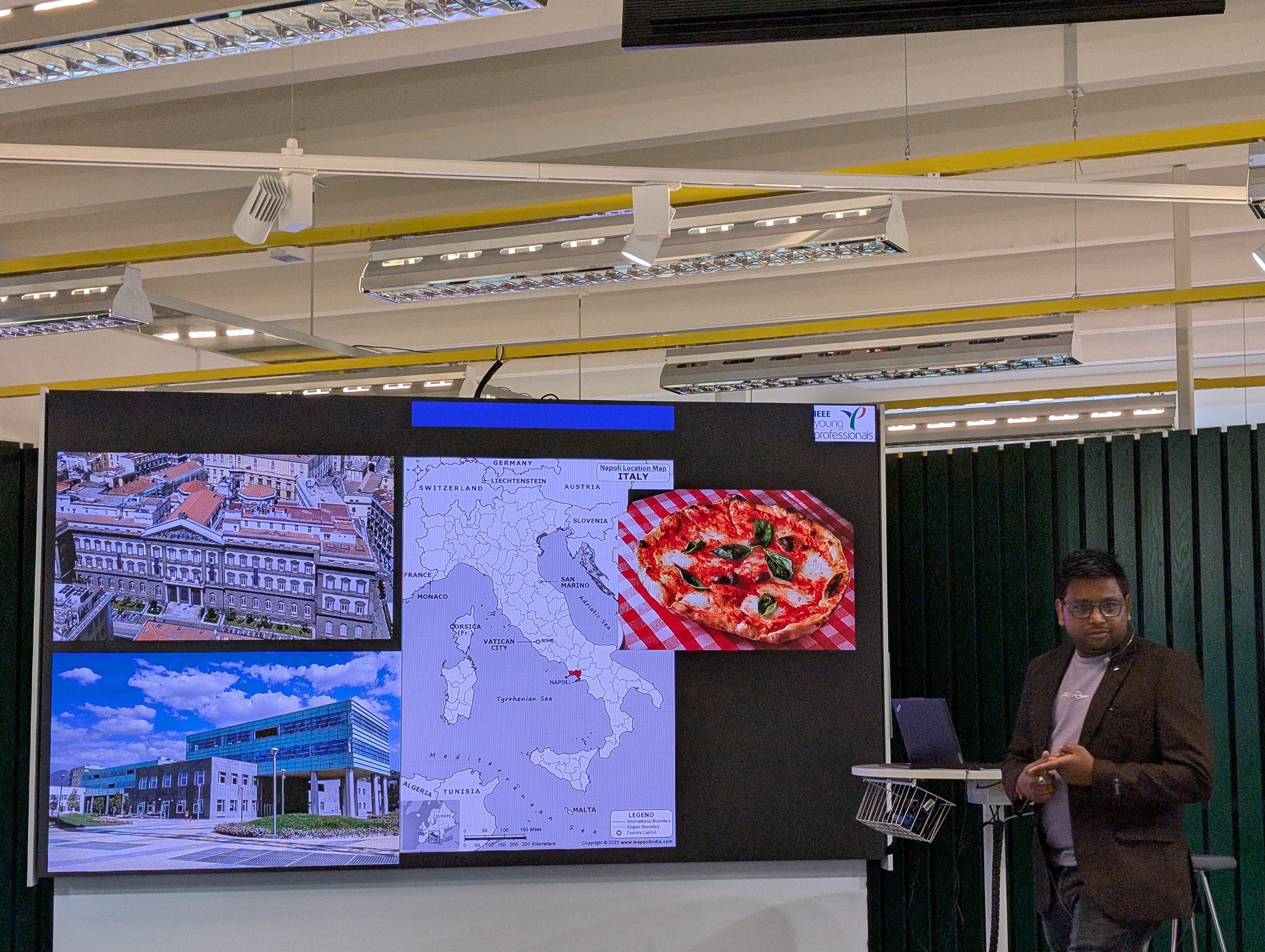
What followed was the story of the Margherita. The way it is usually told, in 1889 a Neapolitan pizzaiolo made one for Queen Margherita of Savoy using tomato, mozzarella, and basil. Red, white, and green. The Italian flag, served on a plate, and from then on it carried the queen's name. A nice piece of trivia, until you notice the thing hiding inside it. A local dish became so tied to one place and one identity that today the law actually protects who is allowed to call a pizza "Napoletana." Somebody, at some point, claimed it. And the claim is what gave it lasting value.
That was the whole talk in miniature, and we did not see it coming.
Three colours, three pillars
From the flag on the plate, Dr. Agarwal walked us to the three pillars that decide whether an idea is patentable at all: novelty, non-obviousness, and utility. Is it new, is it not the obvious next step, and does it actually do something useful. He had a gift for taking a concept that usually arrives wrapped in legalese and handing it to a room of engineers in language we already think in.
Then he made it personal with a case study that landed harder than any definition could.
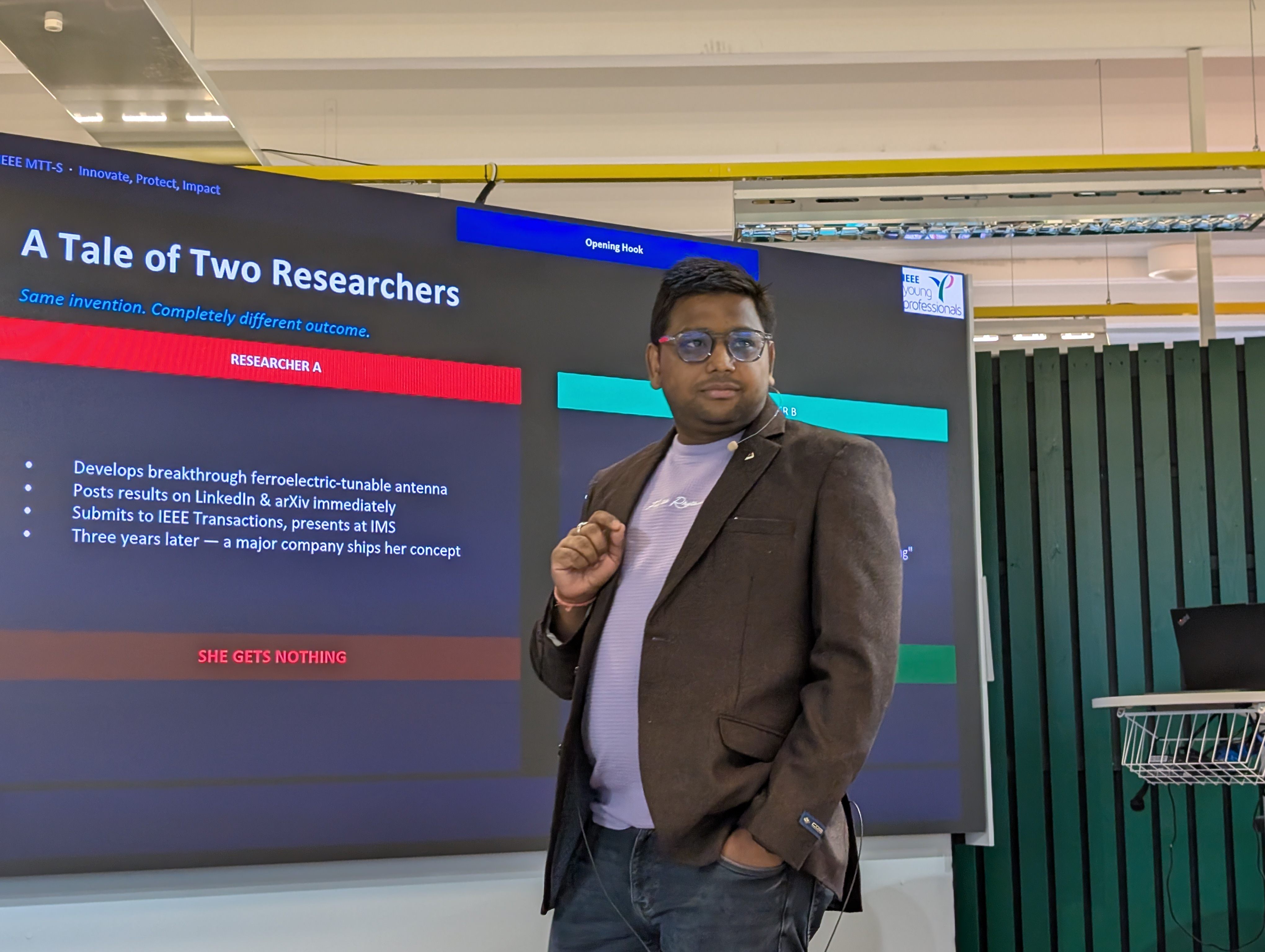
Two researchers. The same ferroelectric tunable antenna. Researcher A publishes immediately, uploads to arXiv and LinkedIn, presents at IMS, and watches a major company ship her concept. She gets a citation and nothing else.
Researcher B develops the identical invention, but contacts the technology transfer office first, files a provisional patent, and only then submits the paper, now stamped "Patent Pending." The same company comes knocking on his university to negotiate. Two million euros in licensing.
Same idea. Same brilliance. Wildly different ending. You could feel the room do the math.
The part nobody had a legal background for, and nobody needed one
From there it became a practical toolkit. Why "file first, publish second" is non-negotiable in most of the world outside the United States, where a single public slide can quietly end your right to protect the work. How the Patent Cooperation Treaty lets one filing reach more than 150 countries. What standard essential patents and FRAND licensing really mean, how Qualcomm turned a portfolio into an empire, and where the still unsettled question of AI and inventorship is heading after the USPTO's late 2025 guidance. No prior knowledge assumed. None required.
The room
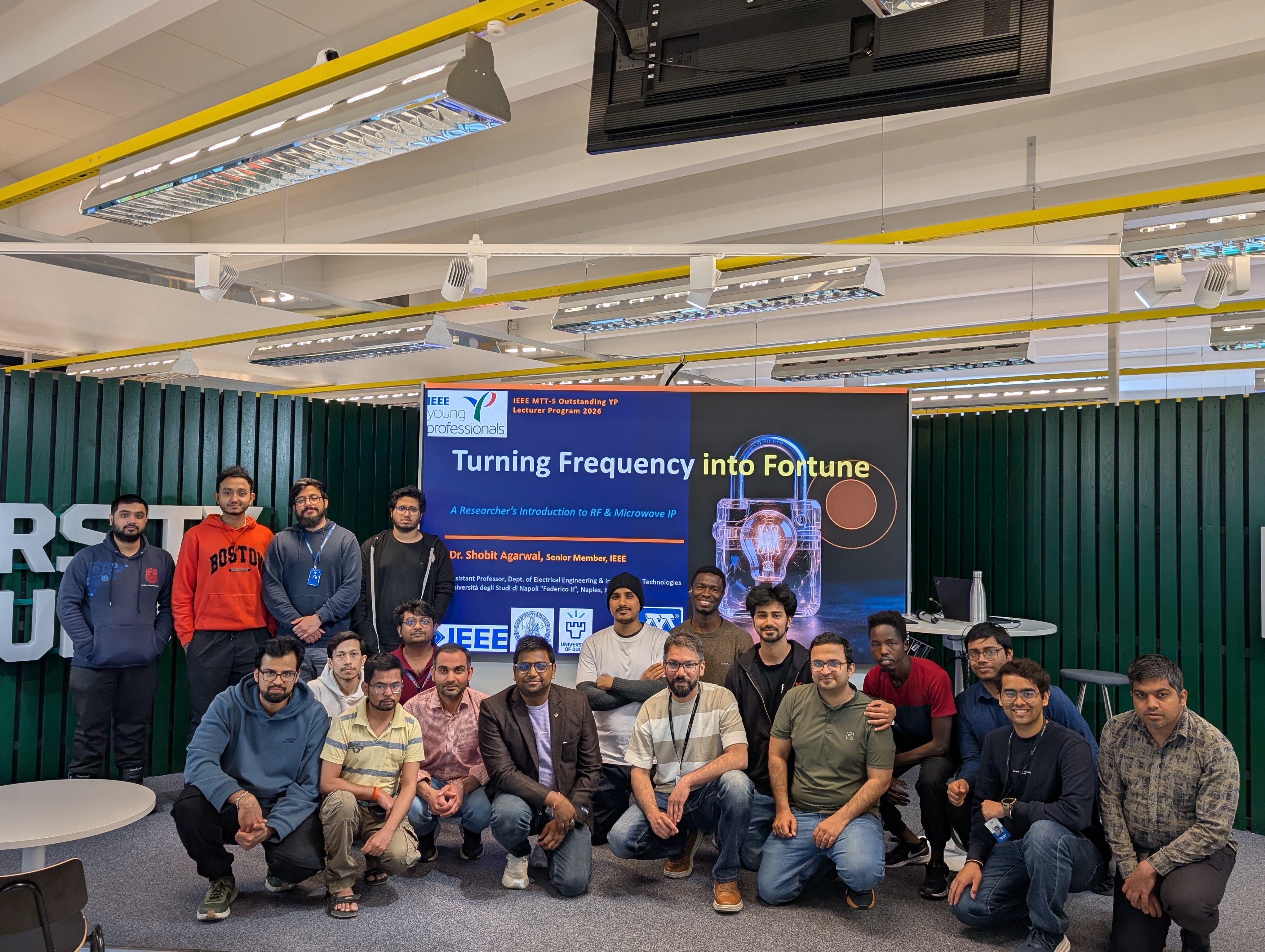
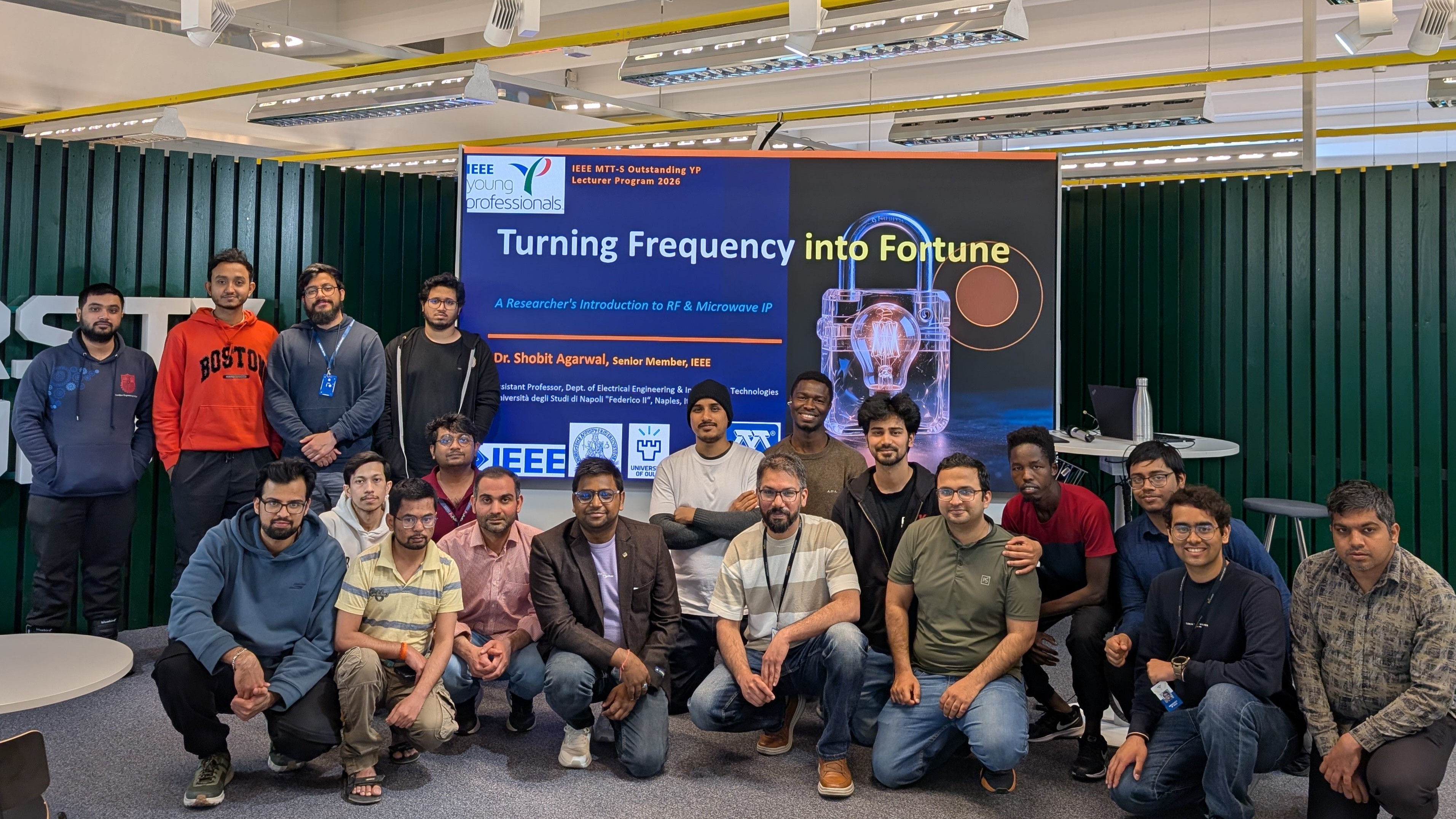
Around 40 people came, from across our degree programmes and at every stage from first year to late PhD, and they filled the relaxed tables of the Tellus Front Stage. The best measure of an afternoon like this is whether the questions outlast the slides, and these did. People kept their hands up. People stayed to talk.
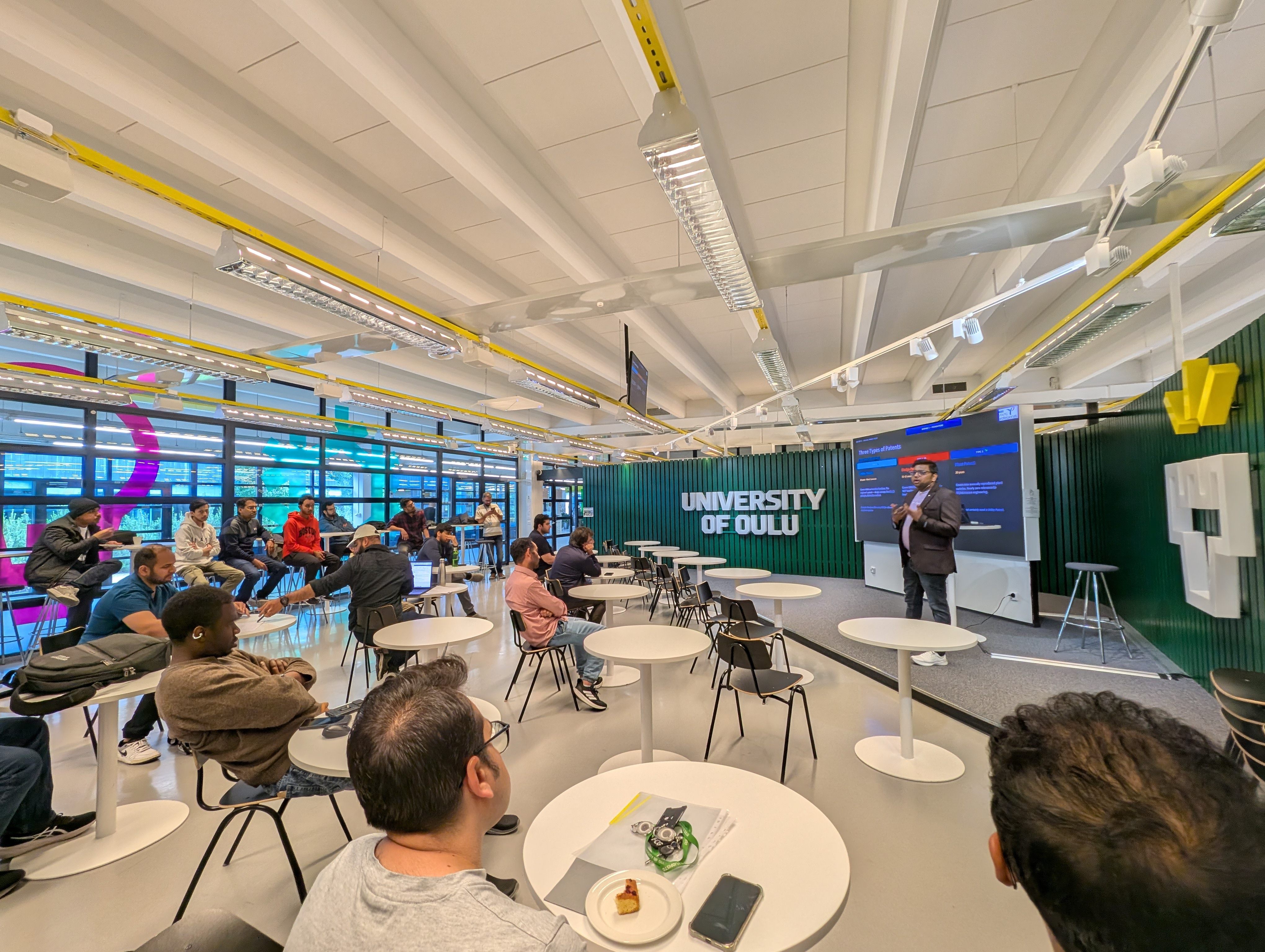
That talking ran on coffee and snacks generously sponsored by ITEE Education, who get our genuine thanks. So does Dr. Agarwal, who crossed half a continent to remind a room full of researchers that the work is only half the job. Claiming it is the other half.
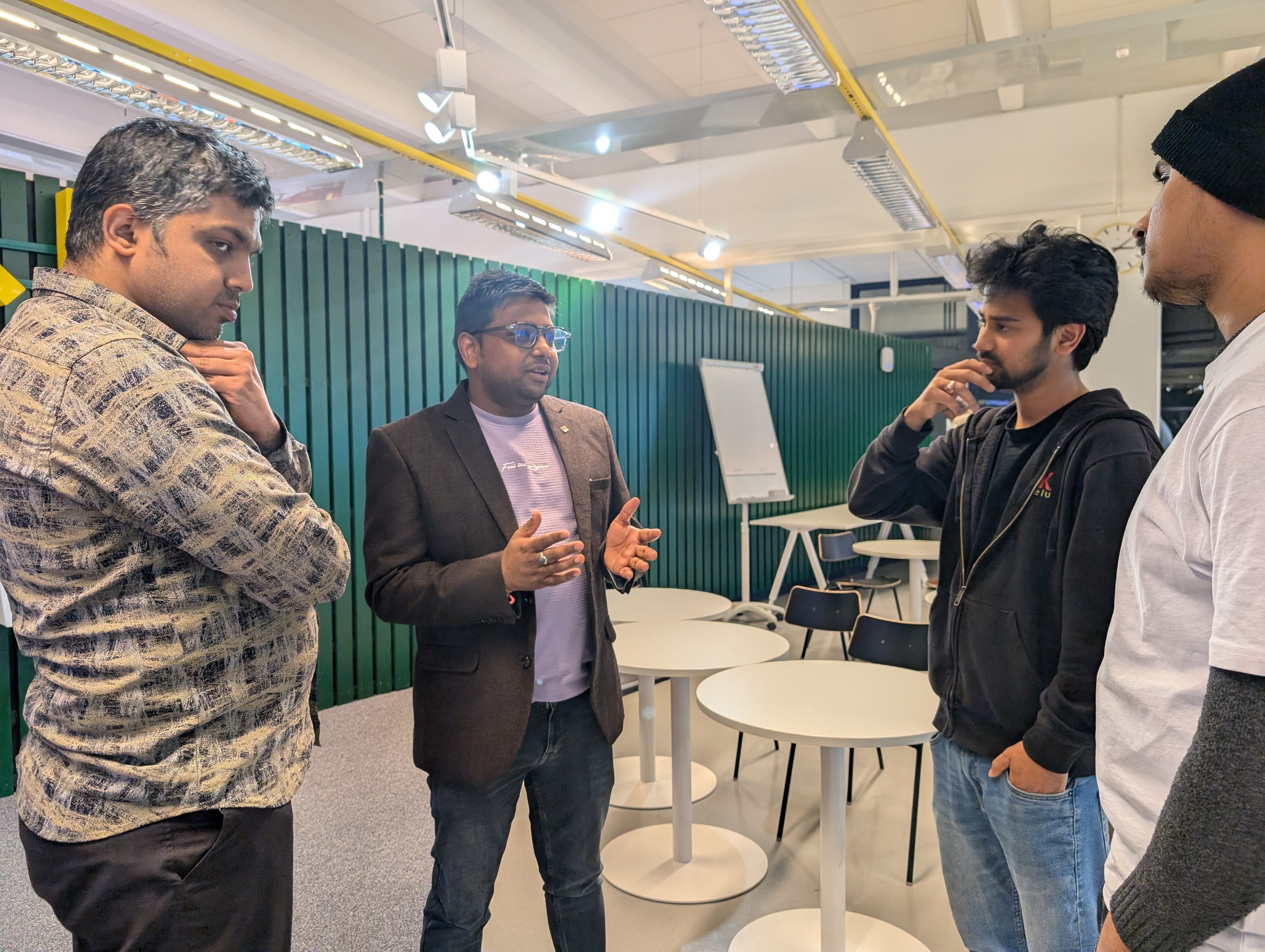
This lecture was part of the IEEE MTT-S Outstanding Young Professional Lecturer Program 2026, hosted by the IEEE Student Branch Oulu as part of our Distinguished Lecturer Series. We will be back with more.
And the next time someone asks what Naples is famous for, a few of us will think about patents before we think about dinner.